


Academic Communities in Dialogue – A Further Milestone in the Collaboration between Nitra and Berehove
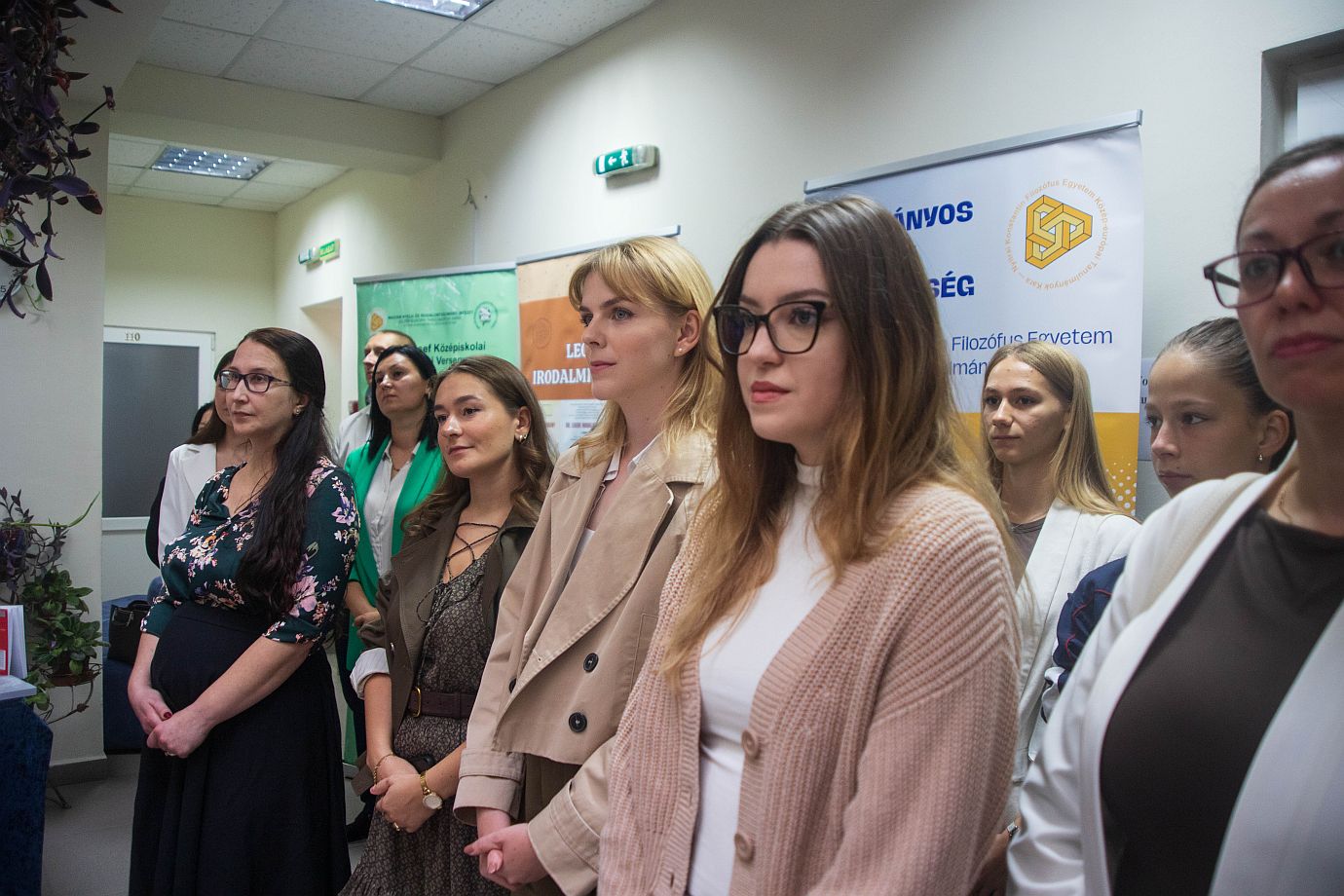
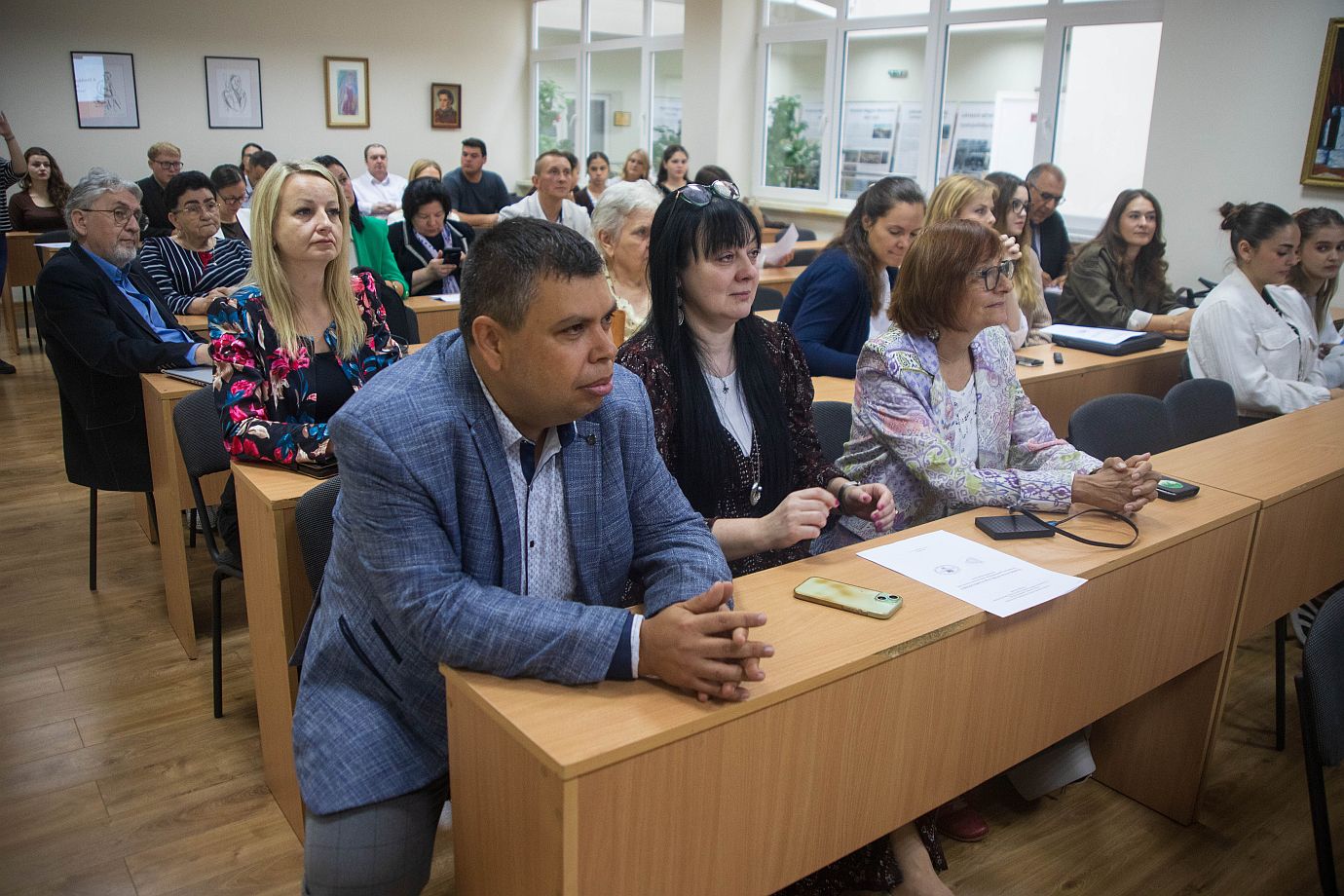
An international conference entitled Academic Communities in Dialogue – Achievements, Partnerships and Shared Research Directions was held in Berehove from 16 to 20 September 2026, jointly organised by the Faculty of Central European Studies at Constantine the Philosopher University in Nitra and the Department of Philology at Ferenc Rákóczi II Transcarpathian Hungarian University. The event offered an opportunity both to present research conducted at the two institutions and to strengthen the longstanding, successful academic relationship between the Hungarian academic communities in Nitra and Berehove.
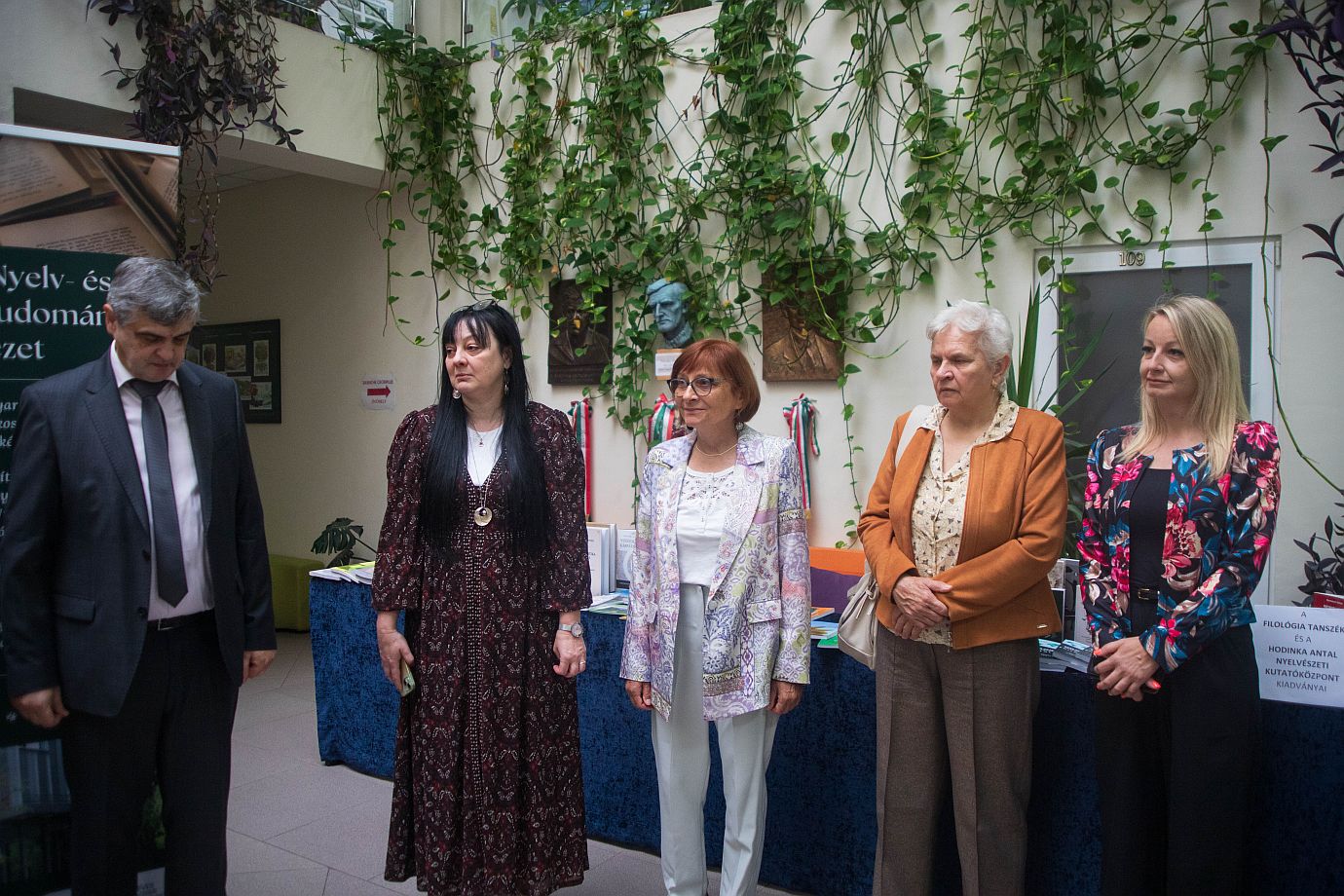
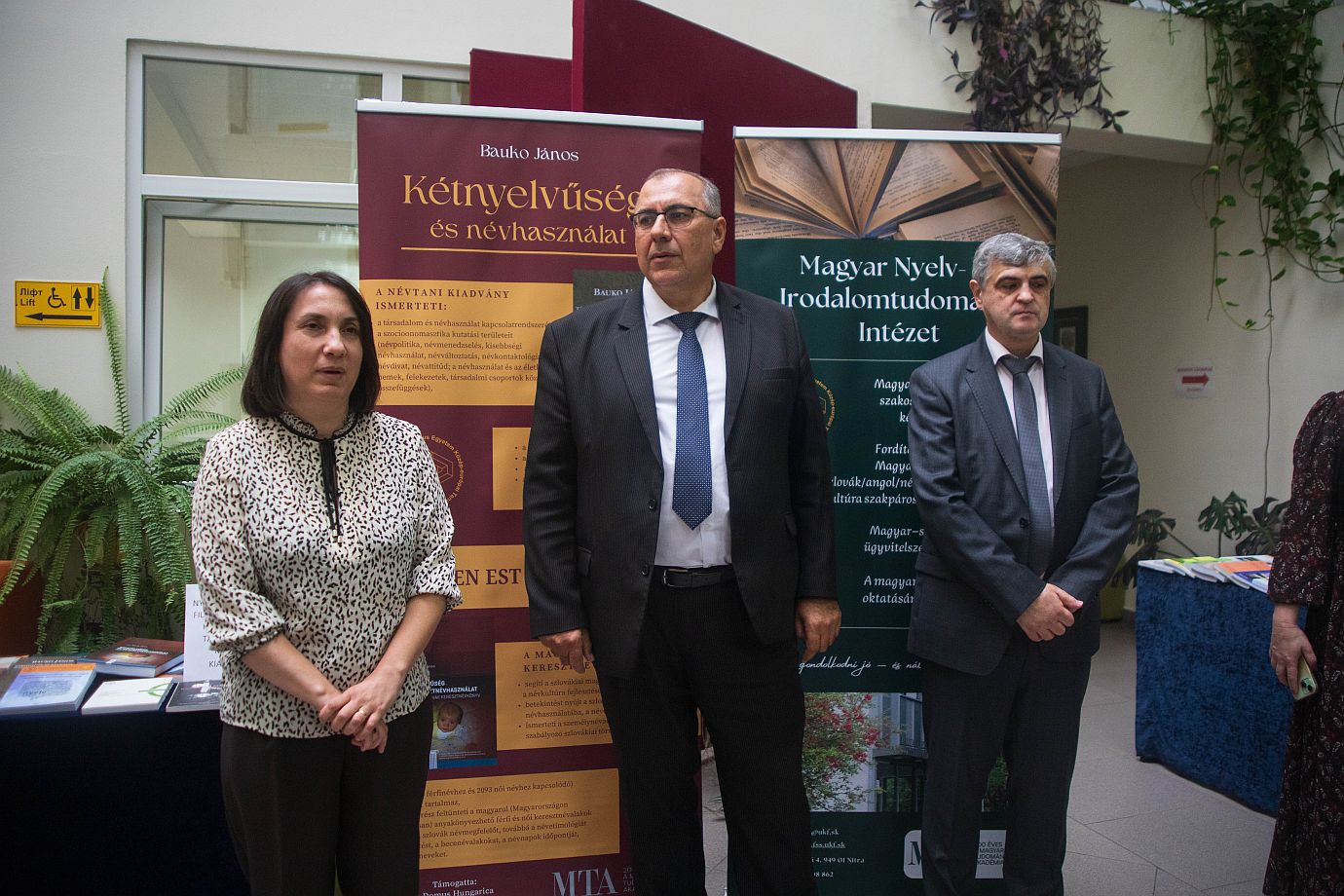
This continuity was one of the conference’s defining features. For many years, academic staff and researchers from the two institutions have regularly met at academic events, jointly explored linguistic, educational and cultural issues affecting Hungarian minority communities, and engaged with one another’s research across a range of fields. Their relationship thus extends well beyond formal institutional cooperation: it constitutes an ongoing academic dialogue sustained by shared research interests, similar academic perspectives and regular personal encounters. At the opening of the conference, Rector István Csernicskó and Head of Institute János Bauko both highlighted these many years of collaboration. János Bauko also noted how much the two academic communities had learnt from one another over the years through organising conferences and exchanging ideas.
The structure of the programme itself was designed to encourage mutual understanding and dialogue. Alongside conventional conference presentations, it featured research project meetings, book and poster exhibitions, workshops, book launches and round-table discussions. On 17 September, the focus was on ongoing and planned research projects at the Institute of Hungarian Linguistics and Literary Science at Constantine the Philosopher University in Nitra, the Department of Philology at Rákóczi University, and the Hodinka Antal Research Centre for Philology. The afternoon programme provided opportunities for joint reflection through a workshop entitled Constructions of Identity in Contemporary Hungarian Literature from Transcarpathia and Slovakia, followed by a round-table discussion on the research priorities of the two institutions.
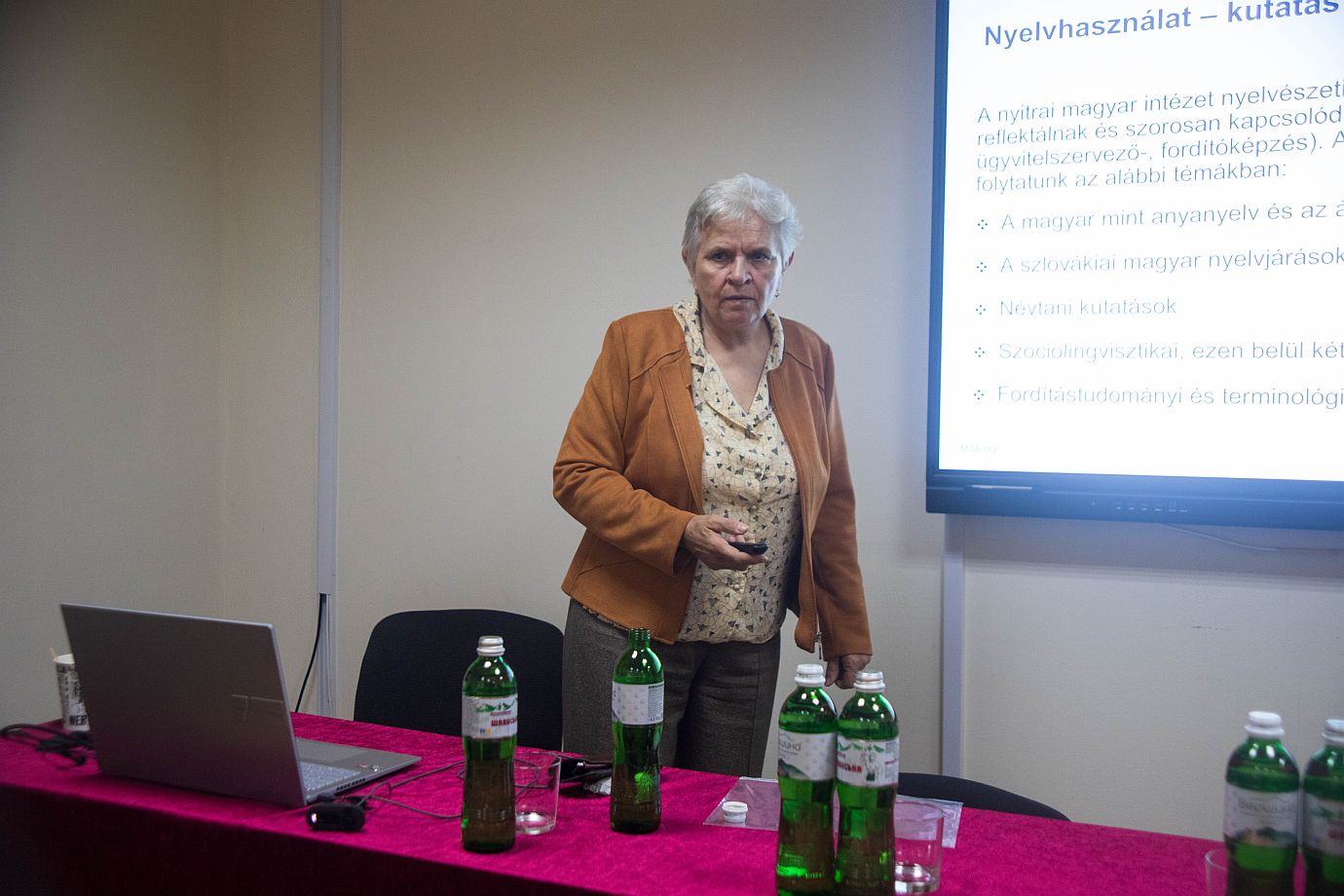
Following the formal opening of the conference, István Csernicskó’s plenary lecture, The Right of Minorities to Education in Their Mother Tongue at Home and Other Countries: Testing an Integrated Language Policy Research Model, placed questions of minority education and language policy within a broader European context. The lecture was followed by a comprehensive introduction to the Institute of Hungarian Linguistics and Literary Science in Nitra, illustrating the diversity of its research profile.
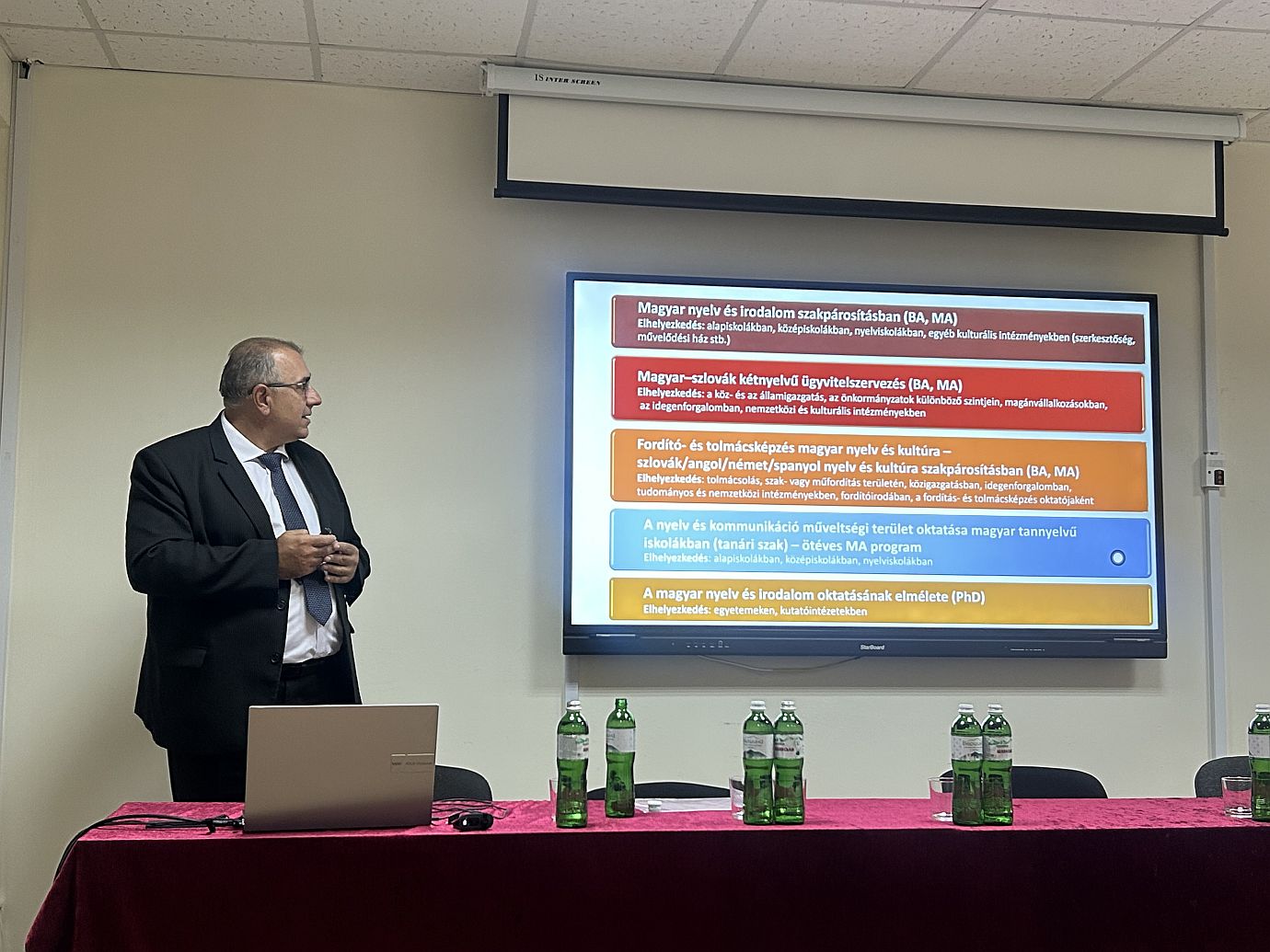
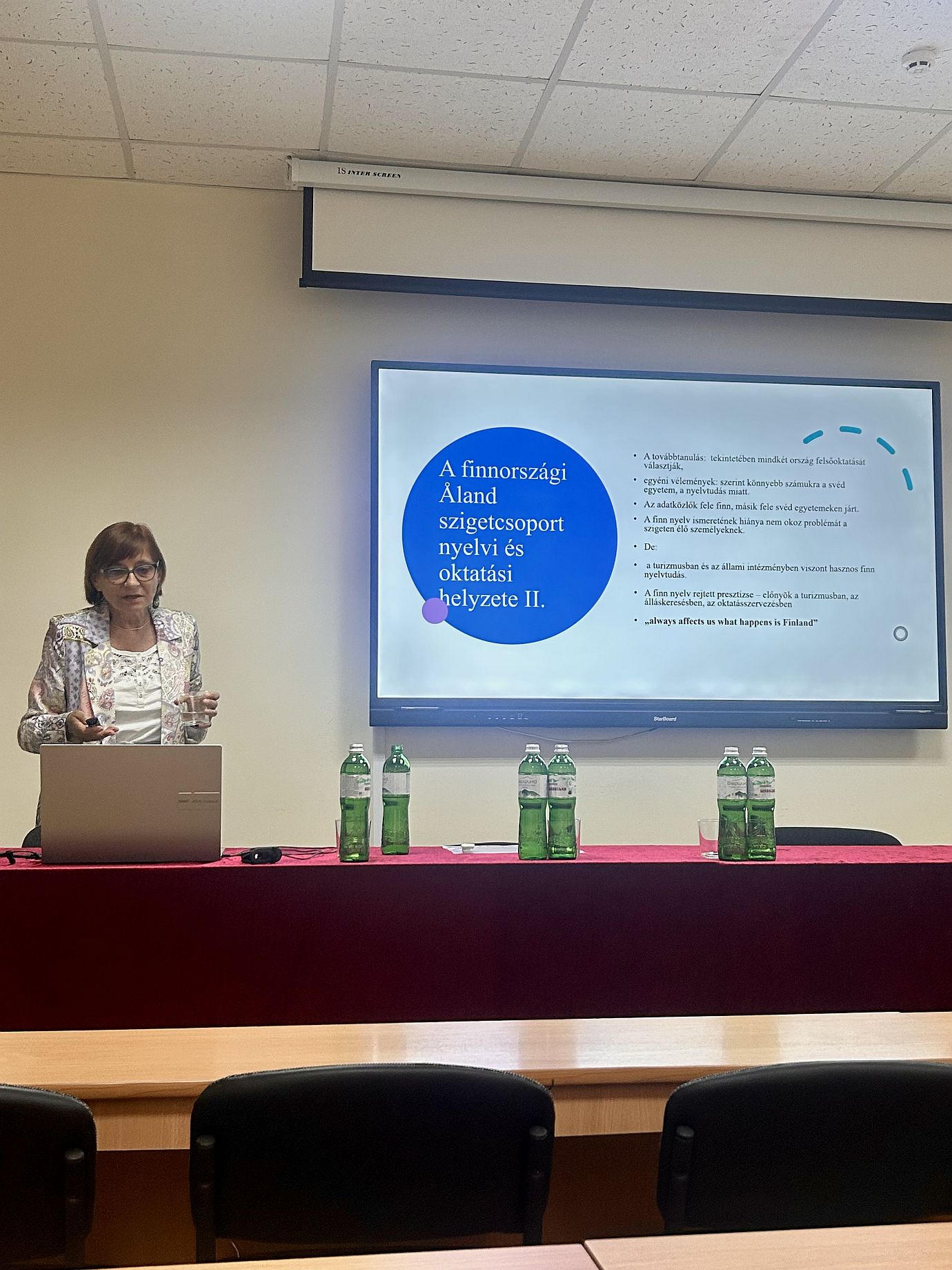
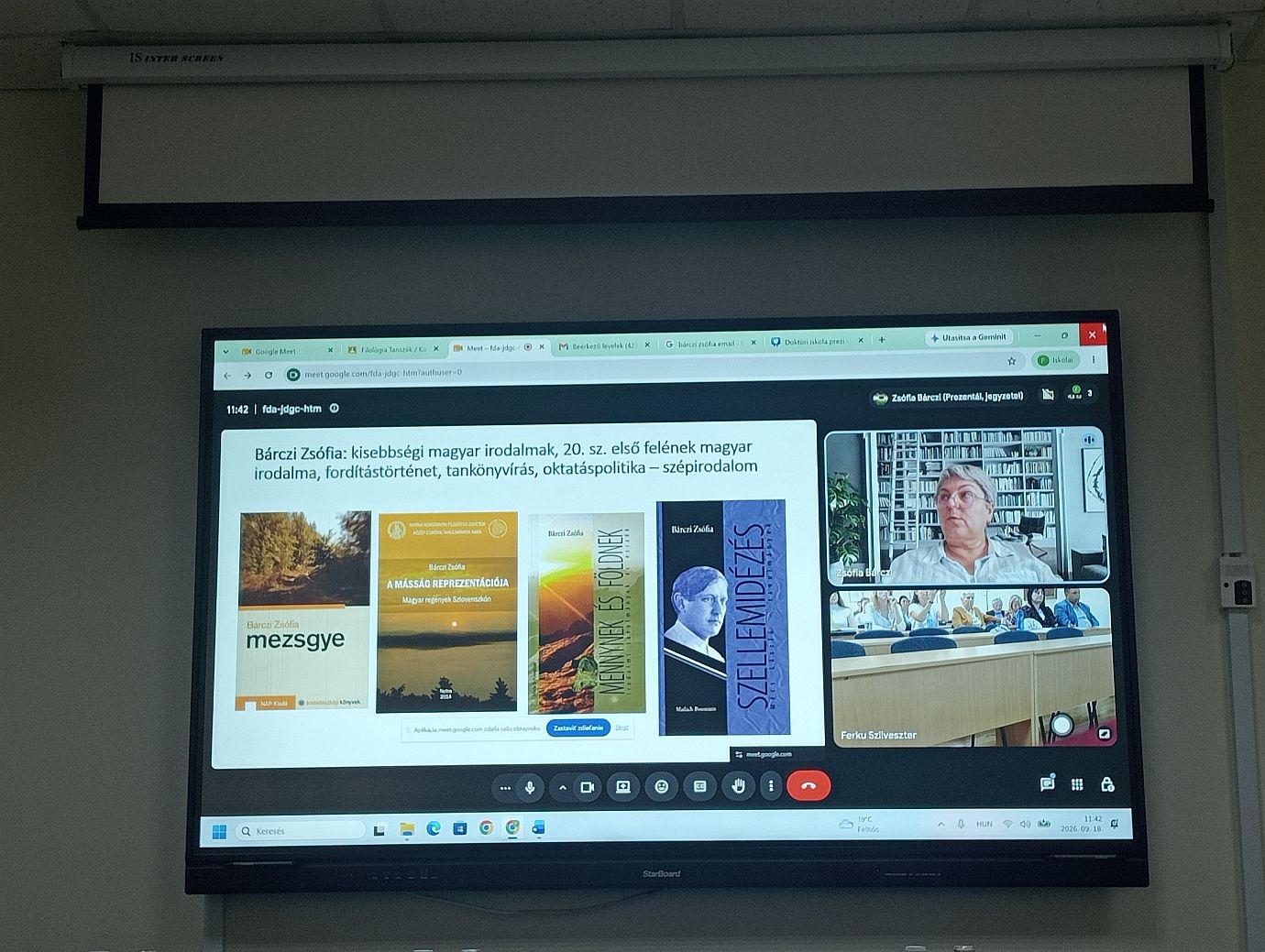
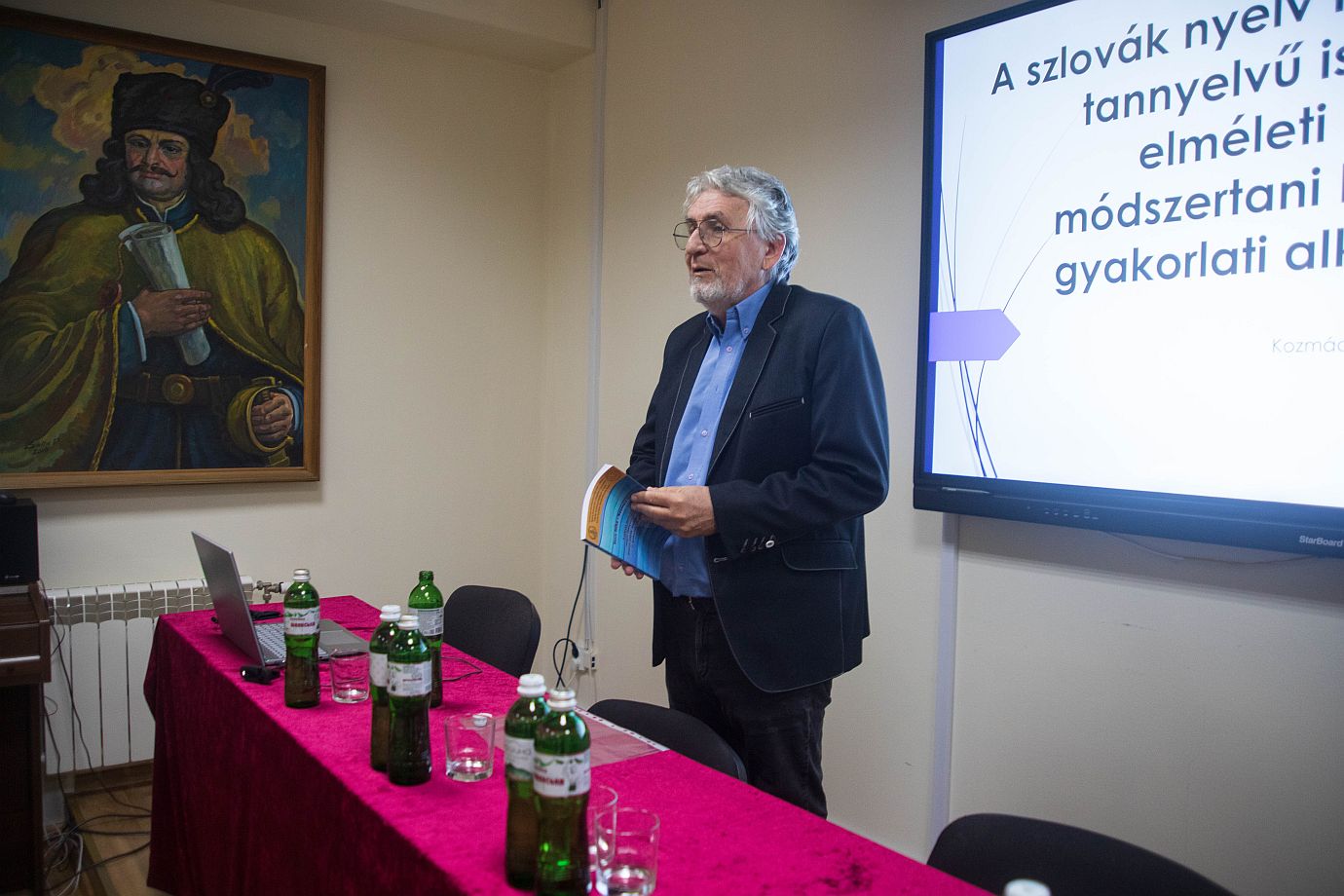
János Bauko presented two research topics. His lecture Society and Name Use – Hungarian Onomastic Research in Slovakia, which also included a book launch, offered insights into the findings of Hungarian onomastic research in Slovakia. In his second presentation, Language Management in a Hungarian–Slovak Bilingual Environment, he addressed bilingual language use and the management of language problems. In her lecture Aspects of the Challenges of Teaching the State Language to Hungarian Minorities in the Carpathian Basin, Ildikó Vančo examined issues surrounding the teaching of state languages to Hungarian minority communities. Closely related to this topic was István Kozmács’s presentation of the university textbook Teaching Slovak in Hungarian- language Schools: Theoretical Foundations, Methodological Issues and Practical Applications, co-authored with Ildikó Vančo. Other major strands of research pursued by the Nitra academic community were also represented. In her lecture Hungarian Terminology Research in Slovakia, Gizella Szabómihály presented findings from terminology research concerning the Hungarian minority. Zsófia Bárczi, presenting the research strand Literature in the Central European Context, discussed the institute’s literary research on transculturalism and multilingualism. Taken together, the presentations outlined a research profile in which the study of language, literature, bilingualism, minority education and the social and cultural context of Central Europe is closely interconnected.
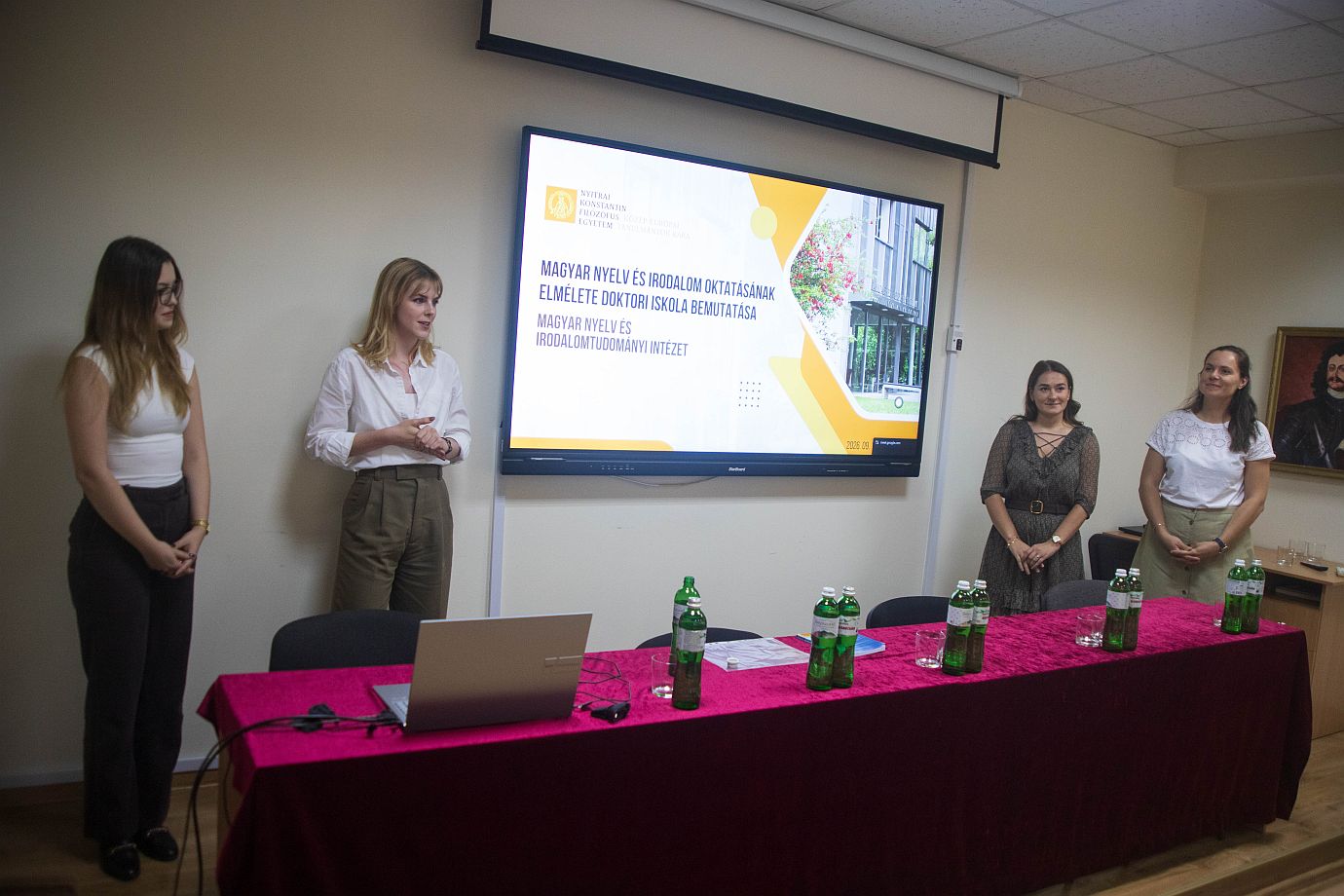
The presentations also addressed the development of the next generation of academics: Anna Oros Bugár, Patrícia Kovács, Tünde Szendi and Natália Szűcs introduced the doctoral programme focusing on the theory and methodology of teaching Hungarian language and literature. The presence of doctoral students gave the meeting particular significance, demonstrating that cooperation between the two institutions builds on established research relationships while also creating opportunities for younger generations of researchers to meet colleagues and develop academic networks.
The afternoon programme showcased the research groups at Ferenc Rákóczi II Transcarpathian Hungarian University and its Department of Philology. The presentations covered Hungarian literature in Transcarpathia, the quarter-century of work undertaken by the Hodinka Antal Research Centre for Philology, multilingualism in public space, Hungarian linguistic research in Transcarpathia, and folk religiosity and sacred communication. The day concluded with book launches showcasing the achievements of the Berehove academic community through publications in language policy, literary studies, linguistics and folklore studies.
The conference’s concluding academic sessions focused more explicitly on the future. Alongside a workshop addressing bilingual educational spaces, teacher education, the teaching of Hungarian grammar and state-language teaching, a separate workshop explored good practices in teaching literature and twenty-first-century trends in minority literature. The round-table discussion entitled Balance and Perspective focused specifically on the challenges and opportunities of collaboration across the Carpathian Basin, as well as on developing plans for joint publications and grant applications.
One of the most significant outcomes of the Berehove meeting therefore cannot be attributed to any single presentation or research topic. The conference as a whole demonstrated that Hungarian academic communities in Slovakia and Transcarpathia address many shared questions while working in different social, language-policy and educational contexts. It is precisely this combination that makes regular exchanges of experience and research collaboration building on one another’s findings particularly valuable.
The Academic Communities in Dialogue conference thus both took stock of achievements to date and identified possible directions for future work. Shared academic interests, mutual trust and regular cooperation sustain the relationship developed over many years between the institutions in Nitra and Berehove. The Berehove meeting marked a further milestone in this successful partnership: an academic encounter with the potential to lead to further joint research, publications and grant proposals.
Written by: Mgr. Patrícia Kovács, Mgr. Anna Oros Bugár, PhD., M. A. Tünde Szendi, Mgr. Natália Szűcsová


